
Gabriel Argy-Rousseau
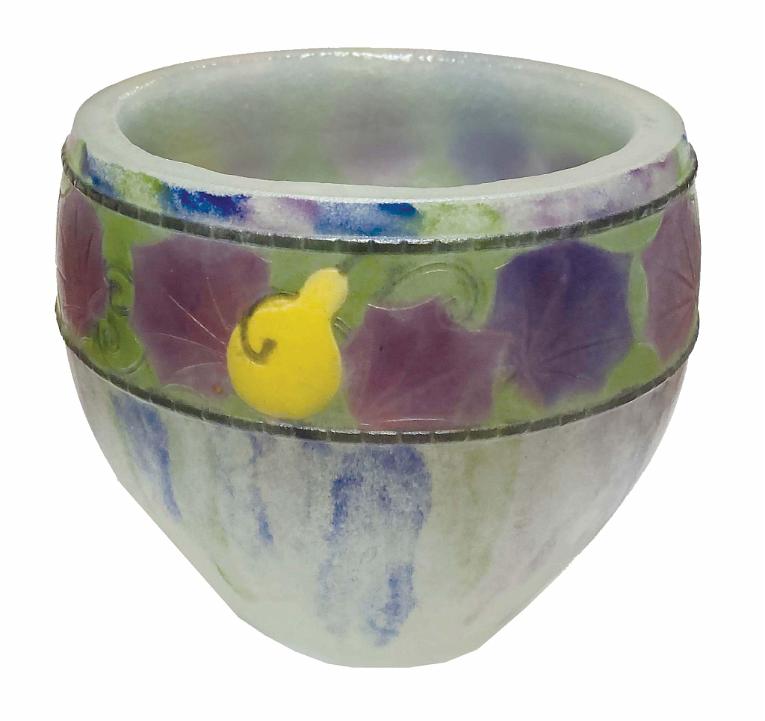
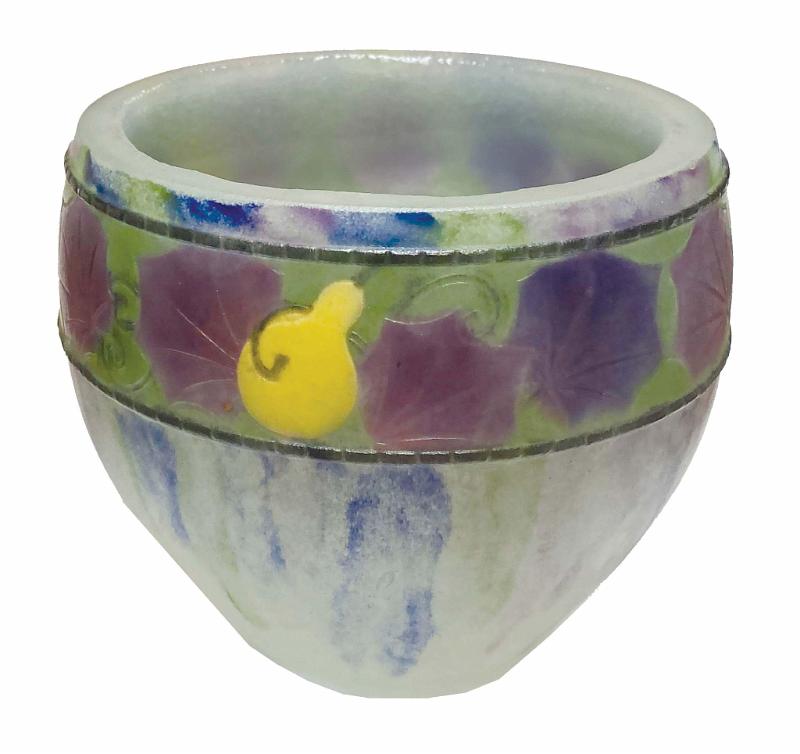
Courde (Gourd) Bowl
Gabriel Argy-Rousseau
French, 1885 - 1953
c. 1920
Glass
3 3/5 x 4 1/4 in. (9.1 x 10.8 cm)
Marked on Bottom
Gabriel Argy-Rousseau (1885–1953) was a French sculptor, ceramicist, and master glassblower who contributed to the rediscovery of pâte de verre as the primary art of glass in the early twentieth century. Born Joseph-Gabriel Rousseau in Meslay-le-Vidame into a peasant family, he graduated from the prestigious École Nationale de Céramique de Sèvres in 1906 with a degree in ceramic engineering. After marrying Marianne Argyriades in 1913, he adopted part of his wife's surname, becoming Gabriel Argy-Rousseau, and opened his own workshop in Paris to experiment with pâte de verre.
Argy-Rousseau was a leading figure of the Art Deco style and, thanks to his early interest in chemistry, was able to work innovatively with the colors and structure of glass. He was one of the few artists who mastered this demanding technique to a masterful degree, and uniquely produced colorful works while his competitors used pâte de verre only to create clear white glass. Argy-Rousseau was one of only six glass artists who truly mastered the difficult pâte de verre technique, distinguishing him among his contemporaries.
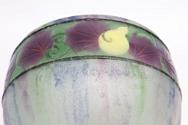
The *Gourd Bowl* exemplifies his refined approach to the medium. The vessel features naturalistic gourd and foliate motifs rendered in soft, luminous tones—yellows and purples contrasting against deeper greens and blues—characteristic of his decorative vocabulary drawn from Art Nouveau's organic forms. Argy-Rousseau produced approximately 200 to 300 different designs between 1914 and 1937, with the period around 1923 generally considered the peak of his artistic achievement. Works in major collections including the Metropolitan Museum of Art attest to his enduring significance as one of the twentieth century's most important glass artists.
Gabriel Argy-Rousseau (1885–1953) was a French sculptor, ceramicist, and master glassblower who contributed to the rediscovery of pâte de verre as the primary art of glass in the early twentieth century. Born Joseph-Gabriel Rousseau in Meslay-le-Vidame into a peasant family, he graduated from the prestigious École Nationale de Céramique de Sèvres in 1906 with a degree in ceramic engineering. After marrying Marianne Argyriades in 1913, he adopted part of his wife's surname, becoming Gabriel Argy-Rousseau, and opened his own workshop in Paris to experiment with pâte de verre.
Argy-Rousseau was a leading figure of the Art Deco style and, thanks to his early interest in chemistry, was able to work innovatively with the colors and structure of glass. He was one of the few artists who mastered this demanding technique to a masterful degree, and uniquely produced colorful works while his competitors used pâte de verre only to create clear white glass. Argy-Rousseau was one of only six glass artists who truly mastered the difficult pâte de verre technique, distinguishing him among his contemporaries.
The *Gourd Bowl* exemplifies his refined approach to the medium. The vessel features naturalistic gourd and foliate motifs rendered in soft, luminous tones—yellows and purples contrasting against deeper greens and blues—characteristic of his decorative vocabulary drawn from Art Nouveau's organic forms. Argy-Rousseau produced approximately 200 to 300 different designs between 1914 and 1937, with the period around 1923 generally considered the peak of his artistic achievement. Works in major collections including the Metropolitan Museum of Art attest to his enduring significance as one of the twentieth century's most important glass artists.
Categories
There are no works to discover for this record.