Paris in Winter
Paris in Winter
Cesar A. Villacres
Ecuadorian, 1880 - 1941
1937
Oil on Canvas
24 x 30 in. (61.0 x 76.2 cm)
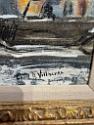
Signed and Dated Lower Right
Framed: 28 1/4 x 32 1/4
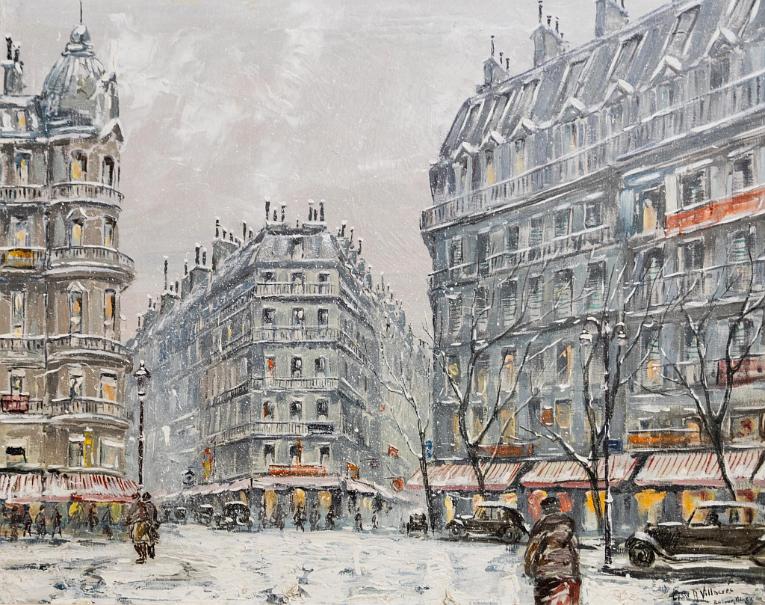
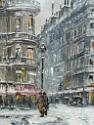
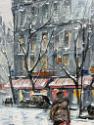
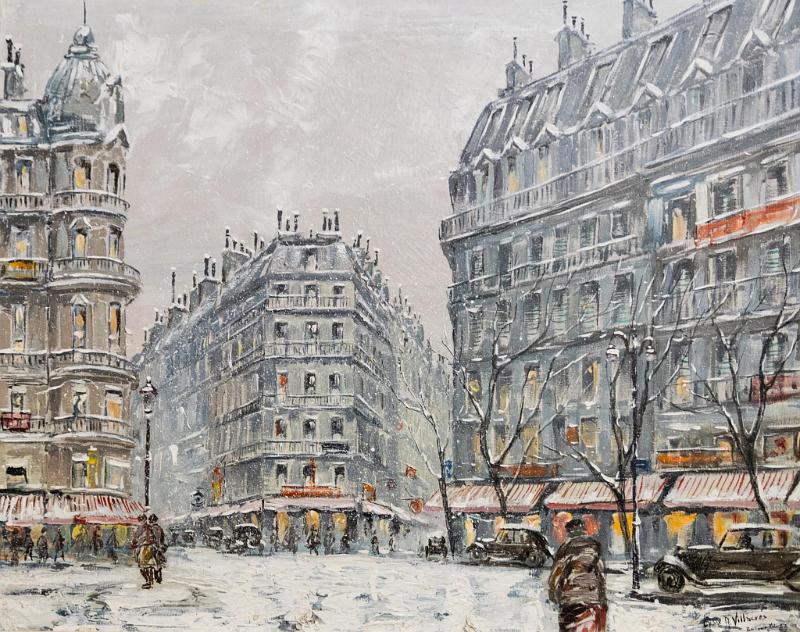
A snow-covered Parisian boulevard, lined with grand Haussmann-era buildings and animated by bundled figures moving through the storm, rendered in Villacrés’s characteristic silvery grey tonalities. The muted palette and soft, atmospheric handling of falling snow exemplify the moody, sensitive impressionism for which the artist was best known.
Why it matters: Villacrés was a School of Paris painter of Ecuadorian birth who exhibited in several European Salons, dividing his output between South American subjects — mountain landscapes and portraits of Ecuadorian people — and the Parisian street scenes considered his signature work. A large-format winter Paris scene like this one, at 24 x 30 in., represents his most sought-after subject at an ambitious scale, well above the smaller cabinet-sized views more commonly found on the market.
Cesar A. Villacrés (1880–1941)
Born in Ecuador in 1880, Cesar Villacrés was a School of Paris painter who worked between South America and France, exhibiting in several European Salons during his career. He is best known for his impressionist Parisian street and boulevard scenes, painted with a distinctive sensitivity to atmosphere and rendered in quiet, silvery grey overtones that set his work apart within the broader School of Paris. Villacrés was also a prolific painter of his native Ecuador, producing mountain landscapes — including views of Chimborazo and the Andean valleys — and portraits of Ecuadorian subjects. A dual citizen of two artistic worlds, his work bridges early twentieth-century European Impressionism and South American landscape painting, and is held today in collections worldwide.
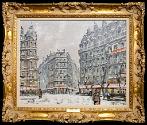
Framed: 28 1/4 x 32 1/4
A snow-covered Parisian boulevard, lined with grand Haussmann-era buildings and animated by bundled figures moving through the storm, rendered in Villacrés’s characteristic silvery grey tonalities. The muted palette and soft, atmospheric handling of falling snow exemplify the moody, sensitive impressionism for which the artist was best known.
Why it matters: Villacrés was a School of Paris painter of Ecuadorian birth who exhibited in several European Salons, dividing his output between South American subjects — mountain landscapes and portraits of Ecuadorian people — and the Parisian street scenes considered his signature work. A large-format winter Paris scene like this one, at 24 x 30 in., represents his most sought-after subject at an ambitious scale, well above the smaller cabinet-sized views more commonly found on the market.
Cesar A. Villacrés (1880–1941)
Born in Ecuador in 1880, Cesar Villacrés was a School of Paris painter who worked between South America and France, exhibiting in several European Salons during his career. He is best known for his impressionist Parisian street and boulevard scenes, painted with a distinctive sensitivity to atmosphere and rendered in quiet, silvery grey overtones that set his work apart within the broader School of Paris. Villacrés was also a prolific painter of his native Ecuador, producing mountain landscapes — including views of Chimborazo and the Andean valleys — and portraits of Ecuadorian subjects. A dual citizen of two artistic worlds, his work bridges early twentieth-century European Impressionism and South American landscape painting, and is held today in collections worldwide.
Categories