The Golden Egg
The Golden Egg
Siegfried Gerhard Reinhardt
American, 1925 - 1984
1972
Oil on Panel
9 x 12 in. (22.9 x 30.5 cm)
SIgned and Dated Lower Left
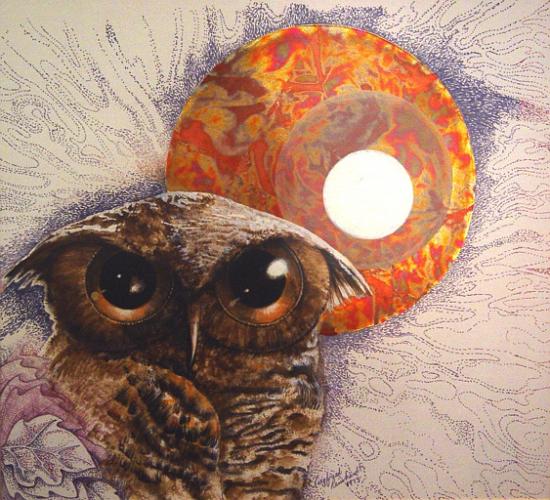
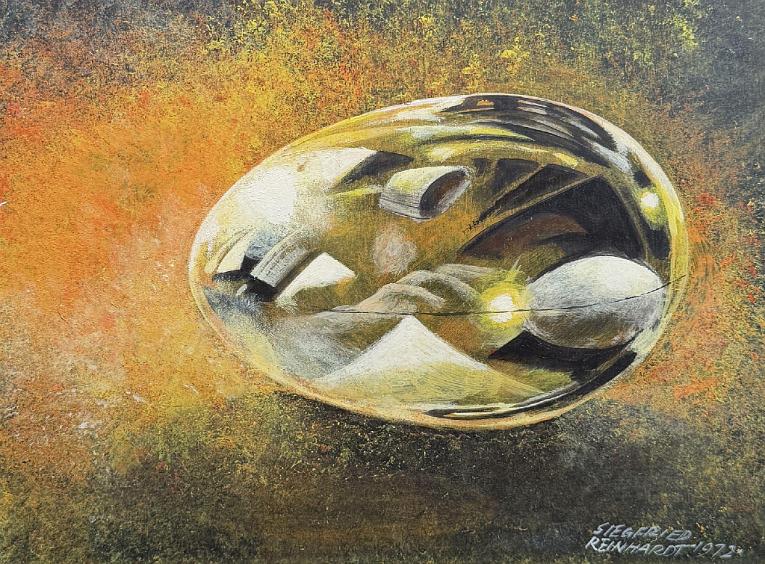
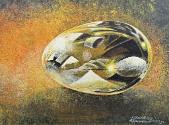
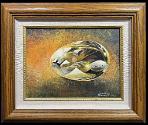
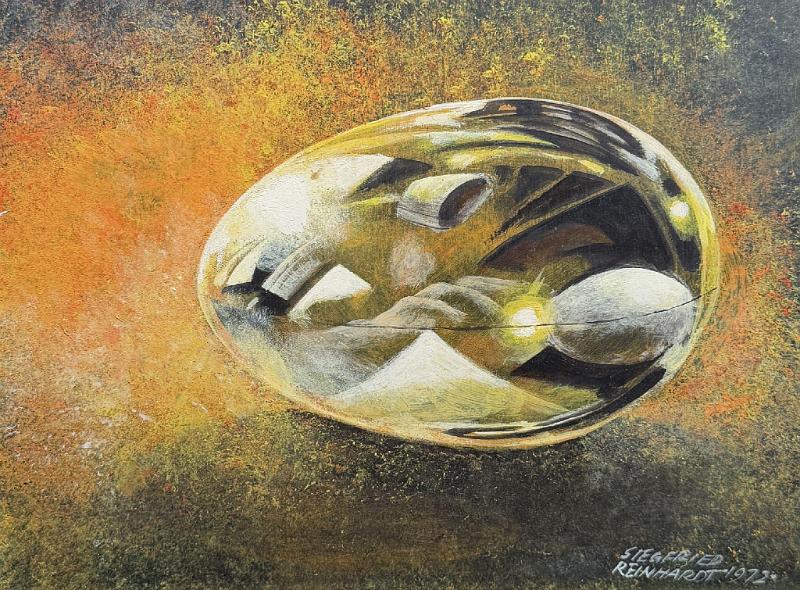
A small, jewel-like painting of a cracked golden egg cradling a luminous pearl, set against a hazy, atmospheric ground of ember-toned pigment. Painted in 1972, the panel distills Reinhardt's superrealist technique to an intimate scale, transforming a single symbolic object into a meditation on birth, fragility, and hidden light.
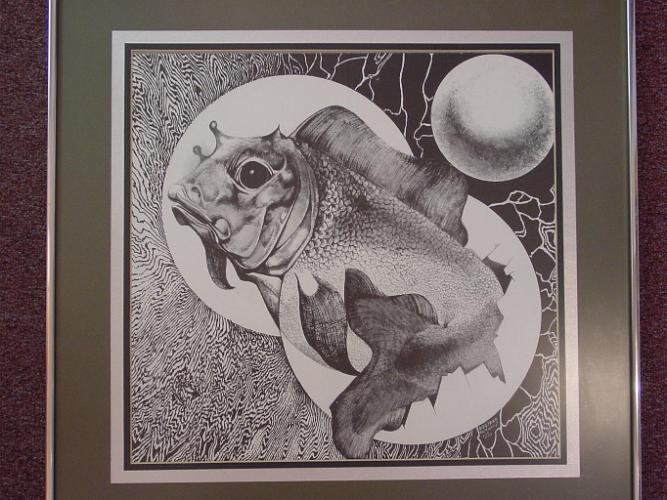
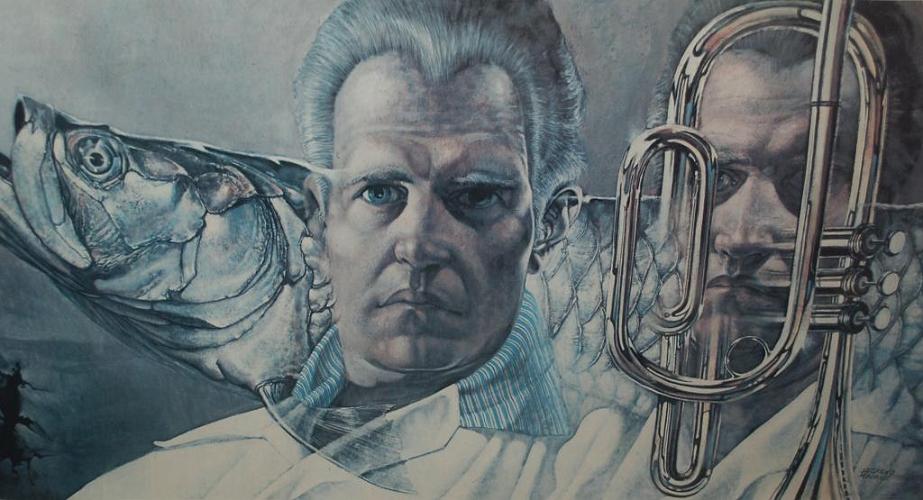
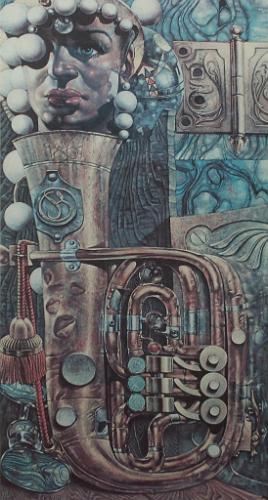
Reinhardt built his national reputation — recognized in his lifetime by Life and Time magazines — on exactly this kind of meticulous, symbol-laden realism, more often seen in his larger murals and stained-glass commissions around St. Louis. A compact panel like this offers an accessible entry point into the technical precision and quiet spiritual undercurrent that define his best work, at a fraction of the scale and price of his major pieces.
Siegfried Gerhard Reinhardt (1925–1984)
Born in Eydkuhnen, Germany, Siegfried Reinhardt emigrated to the United States with his family in 1928 and settled in St. Louis, where he became one of the city's most prominent twentieth-century artists. Though largely self-taught as a painter — he earned his degree in English Literature from Washington University in 1950 — his talent drew early national attention: Life magazine named him among nineteen important new American artists in 1950, and Time profiled him a decade later. Reinhardt taught at Washington University from 1955 to 1970 and was a prominent member of the St. Louis Artists Guild. He is best known for pioneering a style blending realism and surrealism, often called superrealism, and for his decades-long collaboration with St. Louis stained-glass artisan Emil Frei, for whom he designed windows from 1949 until his death in 1984. His most celebrated public commission is the series of murals depicting the history of aviation at Lambert International Airport. A Lutheran, Reinhardt frequently drew on Christian iconography, and his religious and figurative work remains held in numerous private and institutional collections.
A small, jewel-like painting of a cracked golden egg cradling a luminous pearl, set against a hazy, atmospheric ground of ember-toned pigment. Painted in 1972, the panel distills Reinhardt's superrealist technique to an intimate scale, transforming a single symbolic object into a meditation on birth, fragility, and hidden light.
Reinhardt built his national reputation — recognized in his lifetime by Life and Time magazines — on exactly this kind of meticulous, symbol-laden realism, more often seen in his larger murals and stained-glass commissions around St. Louis. A compact panel like this offers an accessible entry point into the technical precision and quiet spiritual undercurrent that define his best work, at a fraction of the scale and price of his major pieces.
Siegfried Gerhard Reinhardt (1925–1984)
Born in Eydkuhnen, Germany, Siegfried Reinhardt emigrated to the United States with his family in 1928 and settled in St. Louis, where he became one of the city's most prominent twentieth-century artists. Though largely self-taught as a painter — he earned his degree in English Literature from Washington University in 1950 — his talent drew early national attention: Life magazine named him among nineteen important new American artists in 1950, and Time profiled him a decade later. Reinhardt taught at Washington University from 1955 to 1970 and was a prominent member of the St. Louis Artists Guild. He is best known for pioneering a style blending realism and surrealism, often called superrealism, and for his decades-long collaboration with St. Louis stained-glass artisan Emil Frei, for whom he designed windows from 1949 until his death in 1984. His most celebrated public commission is the series of murals depicting the history of aviation at Lambert International Airport. A Lutheran, Reinhardt frequently drew on Christian iconography, and his religious and figurative work remains held in numerous private and institutional collections.
Categories