
Art with Heart: Special Valentine's Day Selections
Francois Gerome
French, b. 1895
Gerome’s artistic journey began with formal training at the fine arts academy in Budapest. This early exposure to diverse artistic traditions undoubtedly shaped his approach, grounding him in established academic techniques while simultaneously fostering an appreciation for broader stylistic influences. He was raised within a family of artists, receiving direct instruction from his parents and absorbing their passion for painting. This familial legacy instilled in him not only technical proficiency but also a deep understanding of the craft – a foundation he skillfully built upon throughout his career.
The Art of the Parisian Woman
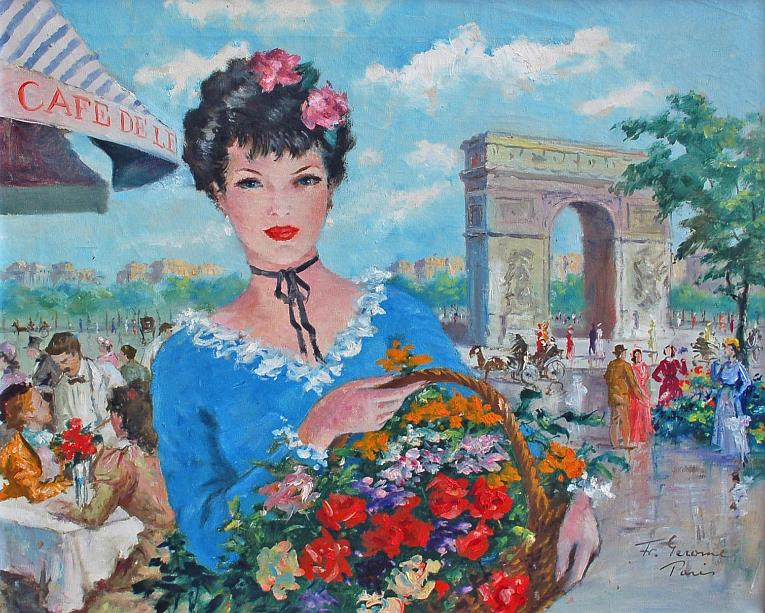
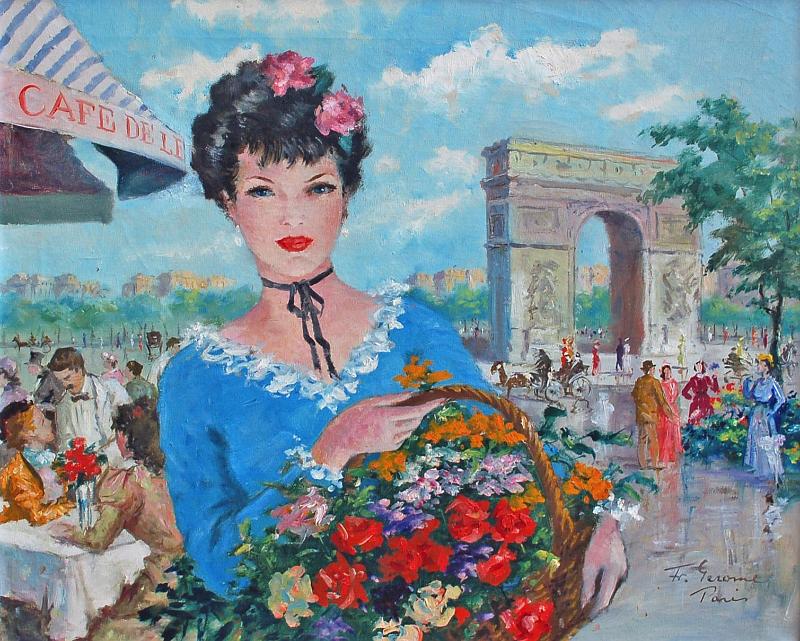
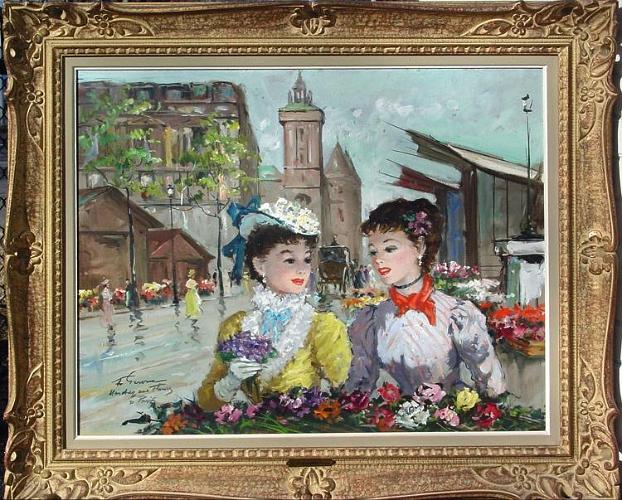
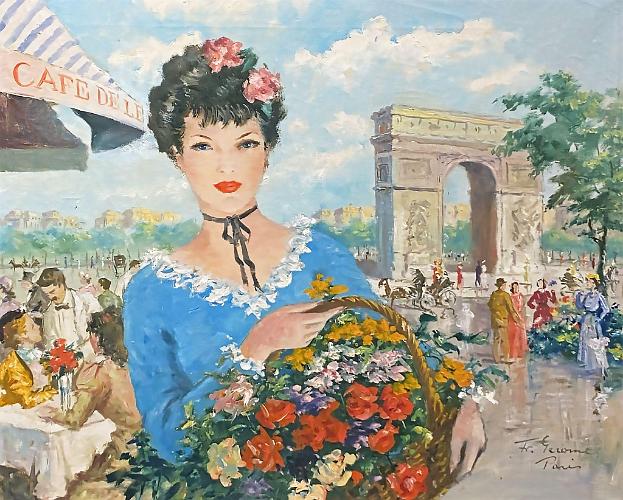
Gerome’s most celebrated works revolve around his depictions of women, and it's this focus that truly defines his artistic identity. These aren’t simply portraits; they are carefully constructed narratives. The women in his paintings rarely engage in conventional social interactions. Instead, they confront the viewer directly, their gazes unwavering and filled with a quiet intensity. This deliberate choice creates an immediate connection, drawing the audience into a private moment of observation. The settings—the bustling Place de la Concorde or the opulent interior of the Opéra—add layers of context, suggesting a world of leisure, social activity, and perhaps even a hint of melancholy.
Technically, Gerome was adept at utilizing oils on canvas or board, achieving a smooth, polished finish that enhanced the luminous quality of his subjects. He typically signed his paintings with his first initial and last name, though he also employed the alias B. Kovacs, adding an element of mystery to his artistic identity. His meticulous attention to detail—from the folds of fabric to the subtle nuances of expression—demonstrates a commitment to realism blended with a distinctly romantic sensibility.
Influences and Style
Gerome’s style can be broadly categorized as belonging to the French Mannerist tradition, yet he also absorbed elements from Impressionism and other contemporary movements. He shared stylistic similarities with artists like Edouard Cortes, Galien-Laloue, and Antoine Blanchard, all of whom explored themes of beauty, light, and atmosphere within a Parisian context. However, Gerome’s distinctive approach—particularly his emphasis on frontal poses and direct gazes—sets him apart.
The influence of the late 19th-century art world is palpable in his work. He was deeply aware of the artistic legacy of artists like Jean-Léon Gérôme (no relation), whose historical paintings established a precedent for grand, theatrical compositions. Yet, Gerome’s focus on intimate scenes and psychological depth represents a departure from this tradition, reflecting a shift towards greater individualism and emotional complexity.
There are no works to discover for this record.