Shipping Platform, Tiff, Missouri
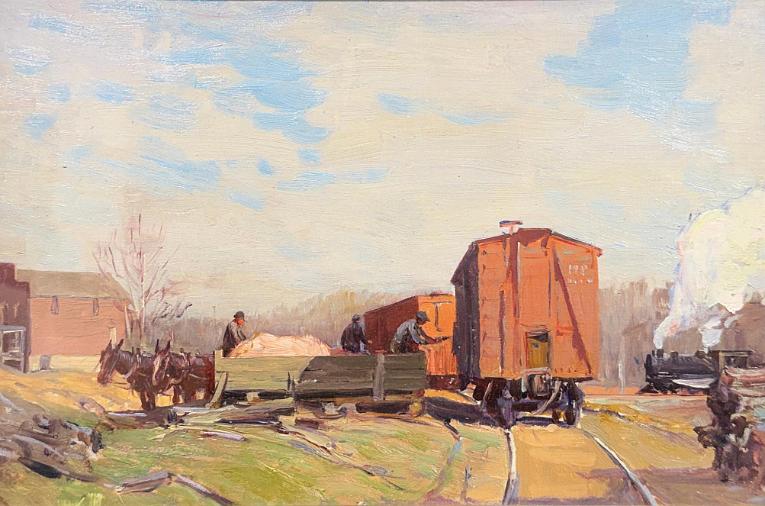
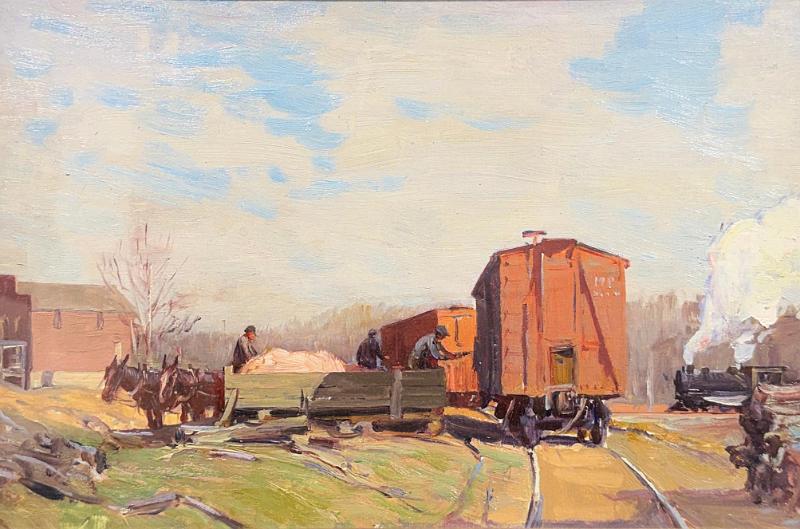
Shipping Platform, Tiff, Missouri
Oscar Edmund Berninghaus
American, 1874 - 1952
c. 1920
Oil on Artist Board
9 x 13 in. (22.9 x 33.0 cm)
Oscar E. Berninghaus (1874–1952) was one of America's most significant twentieth-century artists. Born in St. Louis and trained at the St. Louis School of Fine Arts, Berninghaus became known as "America's Foremost Portrayer of Western Life and Scenes." A founding member of the Taos Society of Artists, he won numerous prestigious awards and maintained deep artistic roots in his native Missouri, creating major works for the Missouri State Capitol and the City Art Museum of St. Louis.
Commission and Purpose
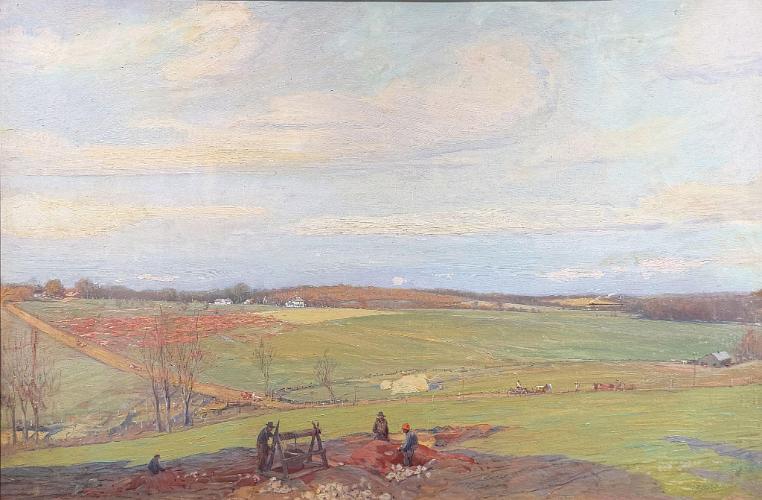
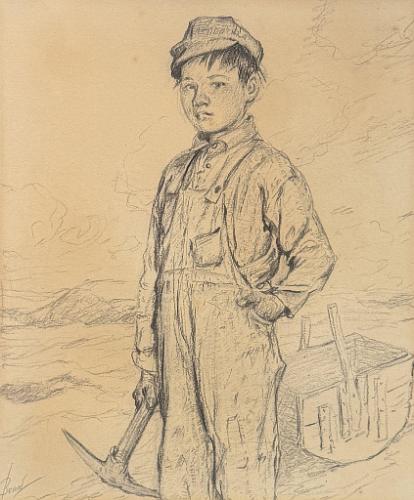
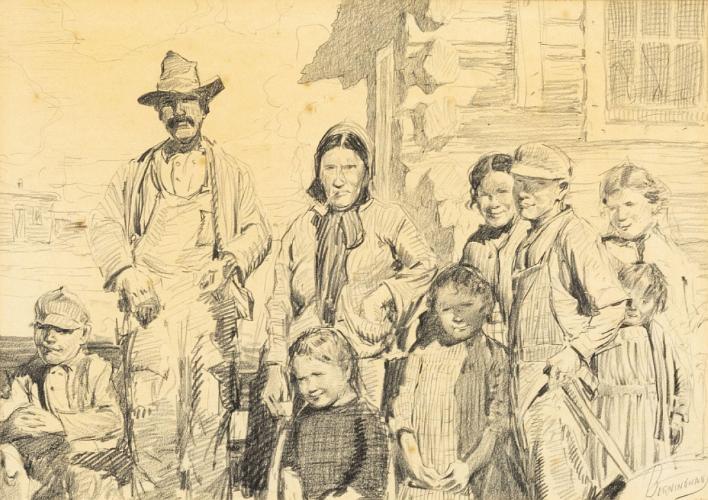
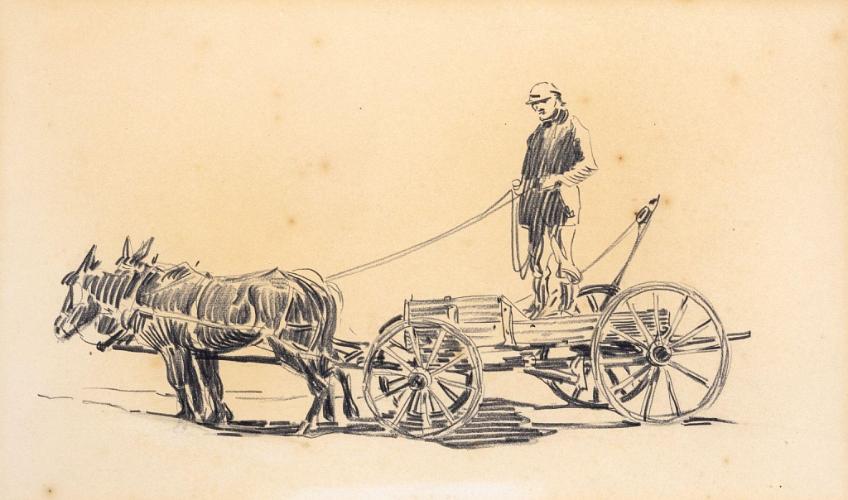
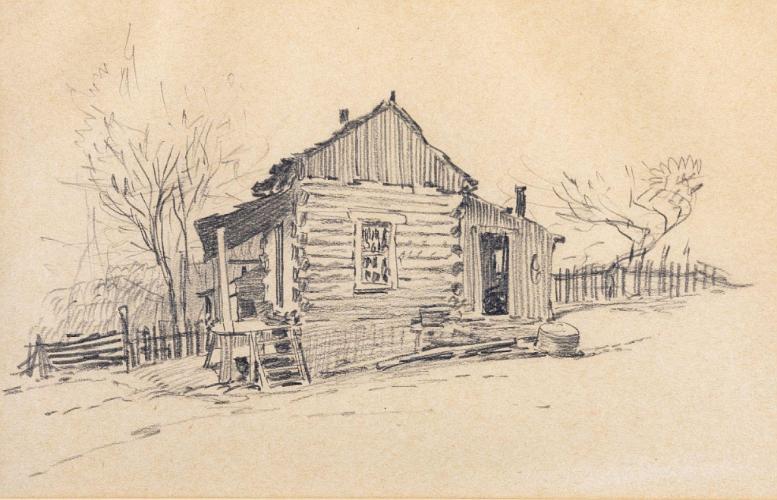
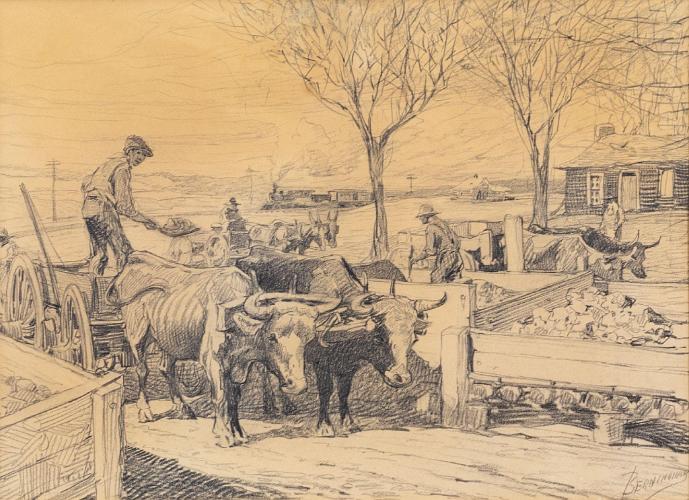
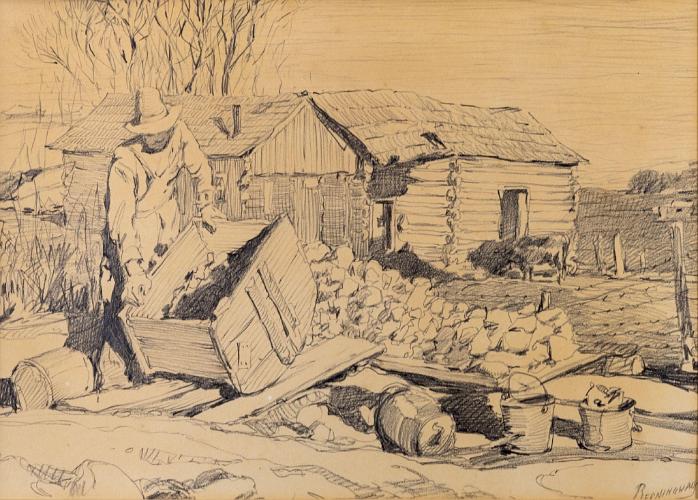
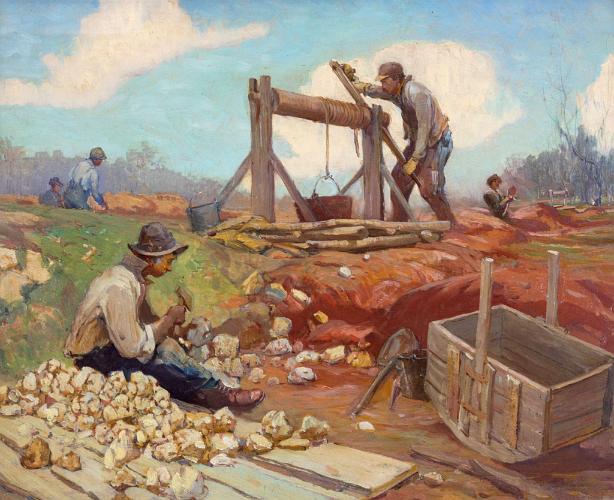
In 1920, the De Lore Baryta Company and J.C. Finck Mineral Milling Company commissioned Berninghaus to create a comprehensive visual record of barytes mining in Washington County, Missouri. The resulting works—oil paintings and pencil sketches created from life in the Ozark foothills—appeared in The Story of Barytes, a landmark publication documenting the region's mining heritage. These artworks served a dual purpose: capturing industrial processes and mining life with artistic integrity while preserving an irreplaceable record of early twentieth-century labor and landscape transformation.
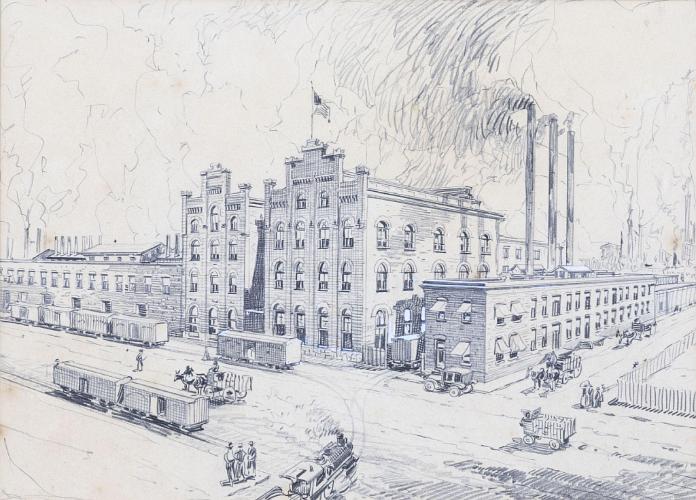
This industrial landscape depicts the DeLore Baryta Company's shipping infrastructure in the village of Tiff, with the red brick processing building prominent, railroad spur, workers, and loaded ore cars. The painting documents the mechanized facilities that connected miners to larger markets and represents Berninghaus's engagement with industrial modernization. Unlike the raw labor scenes of the first painting, this work shows the infrastructure of commerce—the facilities, transportation, and systems that moved raw materials into the national economy. The building and railroad represent twentieth-century progress and connection to the wider world.
Commission and Purpose
In 1920, the De Lore Baryta Company and J.C. Finck Mineral Milling Company commissioned Berninghaus to create a comprehensive visual record of barytes mining in Washington County, Missouri. The resulting works—oil paintings and pencil sketches created from life in the Ozark foothills—appeared in The Story of Barytes, a landmark publication documenting the region's mining heritage. These artworks served a dual purpose: capturing industrial processes and mining life with artistic integrity while preserving an irreplaceable record of early twentieth-century labor and landscape transformation.
This industrial landscape depicts the DeLore Baryta Company's shipping infrastructure in the village of Tiff, with the red brick processing building prominent, railroad spur, workers, and loaded ore cars. The painting documents the mechanized facilities that connected miners to larger markets and represents Berninghaus's engagement with industrial modernization. Unlike the raw labor scenes of the first painting, this work shows the infrastructure of commerce—the facilities, transportation, and systems that moved raw materials into the national economy. The building and railroad represent twentieth-century progress and connection to the wider world.
Oscar Edmund Berninghaus
c. 1920
Oil on Artist's Board