
Missouri Masters: Benton, Berninghaus and Bingham at Kodner Gallery
Missouri Masters: Benton, Berninghaus and Bingham at Kodner Gallery
2026-11-11
November 7, 2026 | ST. LOUIS, MO — Kodner Gallery is pleased to announce Missouri Masters, a new exhibition bringing together significant works by three influential artists in Missouri’s history: Thomas Hart Benton (1889–1975), Oscar Edmund Berninghaus (1874–1952), and George Caleb Bingham (1811–1879). Through their depictions of the state’s people, landscapes, industries, and civic traditions, the exhibition explores the artistic legacy of Missouri across the nineteenth and twentieth centuries.
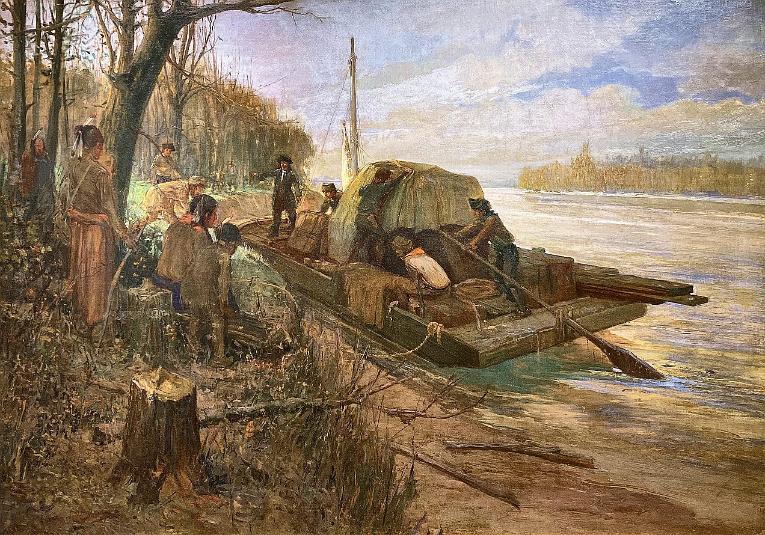
Drawn from the Kodner family’s six decades of engagement with these artists, Missouri Masters presents an exceptional range of historically and artistically significant works: 57 works by Benton from a single private collection, including 56 lithographs and one original drawing; ten previously unexhibited Berninghaus paintings and drawings documenting Missouri’s barytes-mining industry; his monumental painting The Discovery of St. Louis on the Banks of the Mississippi; and four rare aquatint engravings by Bingham.
Together, these works trace Missouri’s history through its landscapes, working communities, political life, and regional traditions. They also offer a rare opportunity to encounter—and acquire—museum-quality works that seldom come to market.
Thomas Hart Benton: A Sweeping Survey of the Artist’s Career
Born in Neosho, Missouri, Thomas Hart Benton (1889–1975) became a leading figure of American Regionalism, developing a distinctly American visual language rooted in the landscapes, communities, folklore, and everyday experiences of the Midwest and South. His monumental mural cycle, A Social History of the State of Missouri, remains a landmark of the state’s public art and historical record.
Missouri Masters features 57 works spanning more than four decades of Benton’s printmaking career, from Coming ’Round the Mountain (1931), among his earliest lithographs, to Youth Music (1974), the final print recorded in Creekmore Fath’s catalogue raisonné. Highlights include three large-scale lithographs inspired by his Missouri State Capitol murals—Huck Finn, Jesse James, and Frankie and Johnny—each published in an edition of just 100 impressions. Also featured is Waiting for the Revolution (1934), an exceptionally scarce print issued in an edition of only ten, alongside scenes of Ozark life, the Missouri landscape, and intimate portraits of the artist’s family.
Oscar Edmund Berninghaus: A Never-Before-Exhibited Record of Missouri’s Barytes Industry
A native of St. Louis and a founding member of the Taos Society of Artists, Oscar Edmund Berninghaus (1874–1952) is widely recognized for his contributions to American Western art. Though his career became closely associated with the landscapes and communities of the American Southwest, his early life and artistic development were rooted in Missouri.
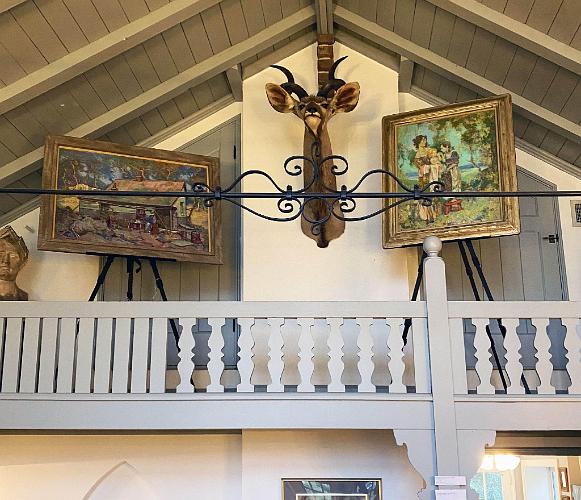
A centerpiece of Missouri Masters is an extraordinary group of ten previously unexhibited works created around 1920 for The Story of Barytes, a publication documenting Missouri’s barytes-mining industry. Comprising three paintings and seven drawings, the works depict mining districts in Washington County near Potosi and Tiff, offering a rare visual record of the region’s industrial and social history.
Berninghaus captures the industry in remarkable detail: miners working the region’s distinctive red-clay fields, landscapes shaped by extraction, shipping platforms, ox and mule teams hauling ore, and the families and communities connected to the mines. His attention extends beyond the mechanics of industry to the people, homes, and local knowledge that sustained it, preserving an intimate portrait of a Missouri region undergoing industrial change.
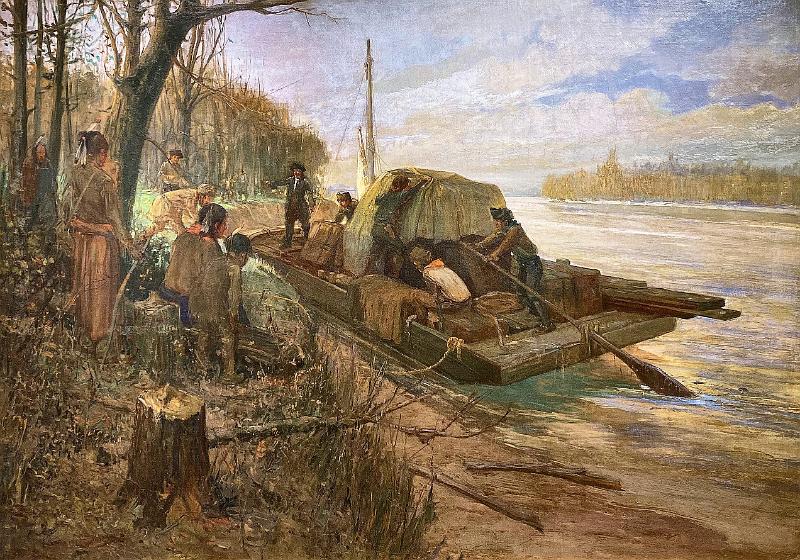
The exhibition also features Berninghaus’s monumental The Discovery of St. Louis on the Banks of the Mississippi (Pierre Laclède Auguste Chouteau) (c. 1915), a large-scale original oil painting depicting the city’s founding and offering a significant interpretation of St. Louis’s early history.
George Caleb Bingham: The People and Politics of Nineteenth-Century Missouri
Often regarded as one of the most important American artists of the nineteenth century, George Caleb Bingham (1811–1879) created an enduring visual record of frontier life, river commerce, and American democracy. Having moved to Missouri as a child, Bingham drew extensively from the people and communities along the Missouri River, translating the experiences of a developing state into some of the era’s most recognizable images of American life.
Missouri Masters features four exceptionally rare aquatint engravings by Bingham: Jolly Flat Boatmen (1847), County Election (1854), Stump Speaking (1856), and Martial Law (1872). Together, these works explore the social and political dimensions of nineteenth-century Missouri, from river commerce to the public rituals, debates, and tensions of frontier democracy.
A Family’s Continuing Engagement with Missouri Art
Missouri Masters is curated, researched, and organized by Roo Kodner, the third generation of the Kodner family to carry forward its longstanding engagement with Missouri’s artistic heritage. For more than 60 years, the family has combined collecting, scholarship, and personal relationships to advance the appreciation and understanding of these artists.
The family’s relationship with Thomas Hart Benton began in the 1960s, when gallery founder Martin Kodner became acquainted with the artist and his wife, Rita. Their connection grew into a friendship marked by correspondence and the exchange of works. In 1965, Benton presented Martin with a lithograph titled Night Firing, inscribed, “To Martin Kodner from Thomas H. Benton, Christmas ’65.”
Martin also devoted years to researching the life and work of Oscar Edmund Berninghaus, assembling extensive biographical, historical, and documentary materials that laid the foundation for the Oscar Edmund Berninghaus Research Project. Continued by his sons, Jonathan and David Kodner, the initiative brings together archival records, correspondence, photographs, and documentation of works in public and private collections to further the study of the artist’s career.
Together, these relationships and research initiatives reflect the Kodner family’s enduring commitment to preserving, documenting, and making accessible the artistic traditions that have shaped Missouri’s cultural identity and the direction of this exhibition.
Exhibition Information
Missouri Masters
Opening Reception: Thursday, November 12, 2026, 5–7 p.m.
On View: November 12, 2026 – February 11, 2027
Location: Kodner Gallery, 9650 Clayton Road, St. Louis, Missouri
Visit the Missouri Masters viewing room · Read the press release

2018-03-23


2026-02-07

2024-04-17

