Cotton Pickers
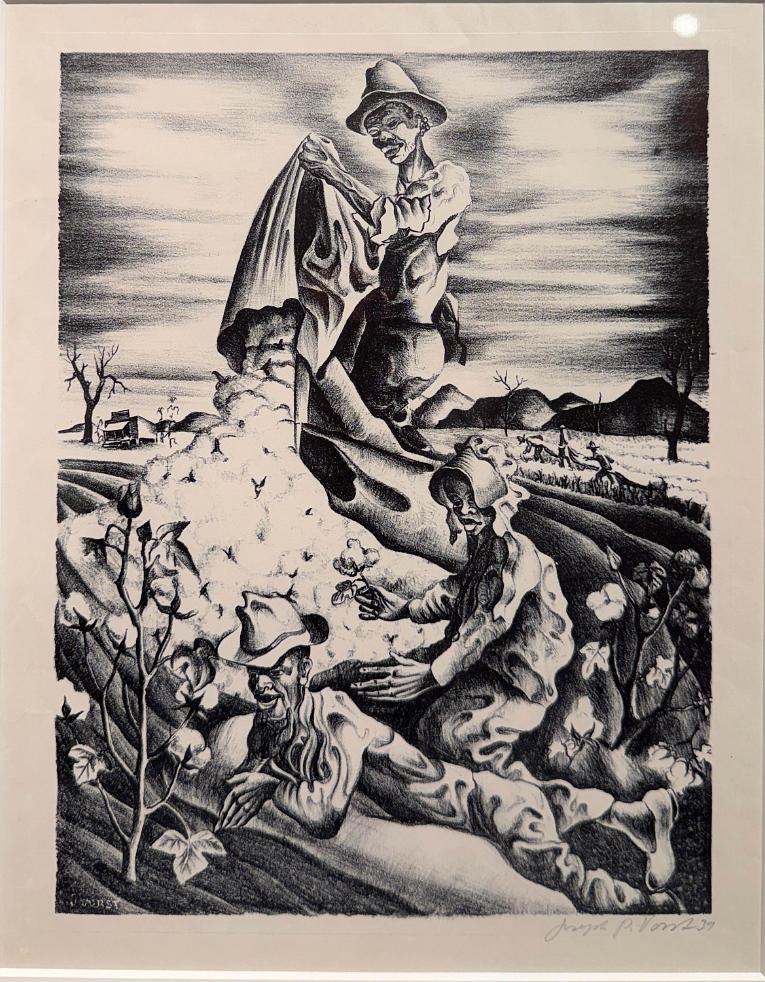
Cotton Pickers
1934
Lithograph
12 x 9 in. (30.5 x 22.9 cm)
Signed and dated in pencil lower right.
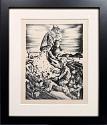
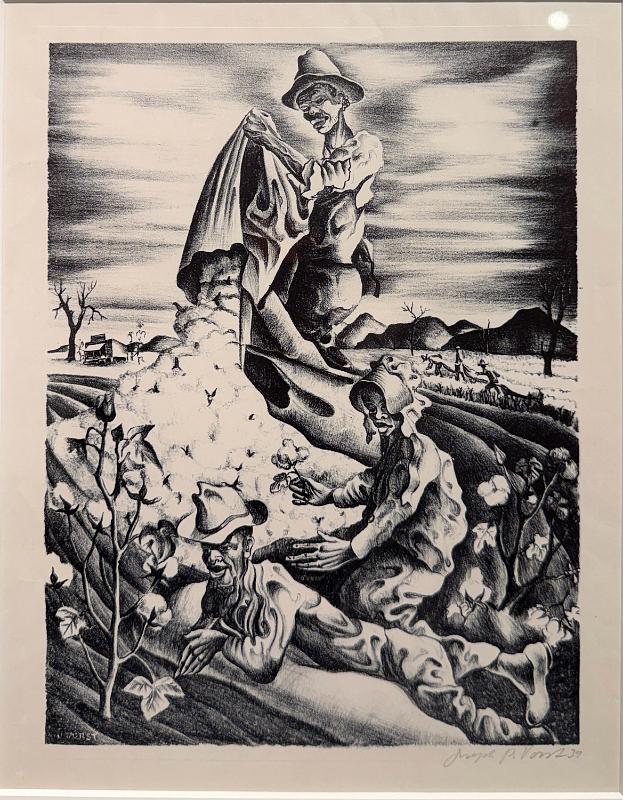
Field hands at work in a cotton field.
Cotton labor in the Missouri Bootheel was a recurring subject for Vorst, who treated rural hardship and farm work throughout his Missouri prints of the 1930s.
Joseph Paul Vorst (1897–1947)
Joseph Paul Vorst was born in Essen, Germany, studied at the Folkwang school in Hagen, and was left with a permanent limp from service in the First World War. He continued his training in Berlin under Max Liebermann and Max Slevogt and worked in both Expressionist and New Objectivity idioms before emigrating to the United States in 1930. He settled in Missouri near relatives in Ste. Genevieve, became associated with the Ste. Genevieve Art Colony, and taught in St. Louis. Vorst worked for the New Deal art programs, painting post office murals for Vandalia (Corn Harvest) and Bethany (Time Out), and he is recorded as having shared a studio for a time with Thomas Hart Benton. His paintings and lithographs of the Depression years address drought, flood, sharecropping and rural faith. His work is in the National Gallery of Art, the Smithsonian American Art Museum, the Metropolitan Museum of Art and the Saint Louis Art Museum. He died in Overland, Missouri.
Field hands at work in a cotton field.
Cotton labor in the Missouri Bootheel was a recurring subject for Vorst, who treated rural hardship and farm work throughout his Missouri prints of the 1930s.
Joseph Paul Vorst (1897–1947)
Joseph Paul Vorst was born in Essen, Germany, studied at the Folkwang school in Hagen, and was left with a permanent limp from service in the First World War. He continued his training in Berlin under Max Liebermann and Max Slevogt and worked in both Expressionist and New Objectivity idioms before emigrating to the United States in 1930. He settled in Missouri near relatives in Ste. Genevieve, became associated with the Ste. Genevieve Art Colony, and taught in St. Louis. Vorst worked for the New Deal art programs, painting post office murals for Vandalia (Corn Harvest) and Bethany (Time Out), and he is recorded as having shared a studio for a time with Thomas Hart Benton. His paintings and lithographs of the Depression years address drought, flood, sharecropping and rural faith. His work is in the National Gallery of Art, the Smithsonian American Art Museum, the Metropolitan Museum of Art and the Saint Louis Art Museum. He died in Overland, Missouri.
Categories