
Gabriel Argy-Rousseau
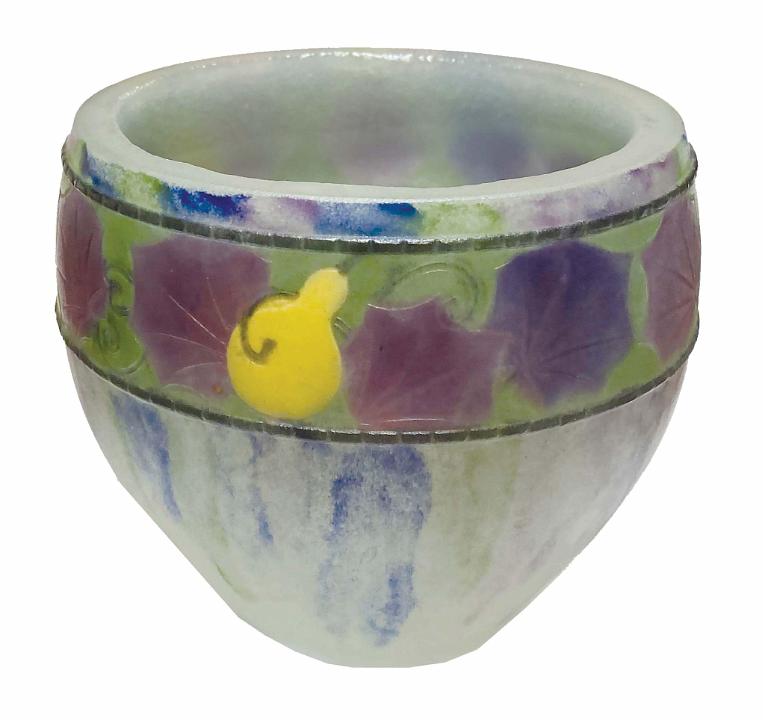
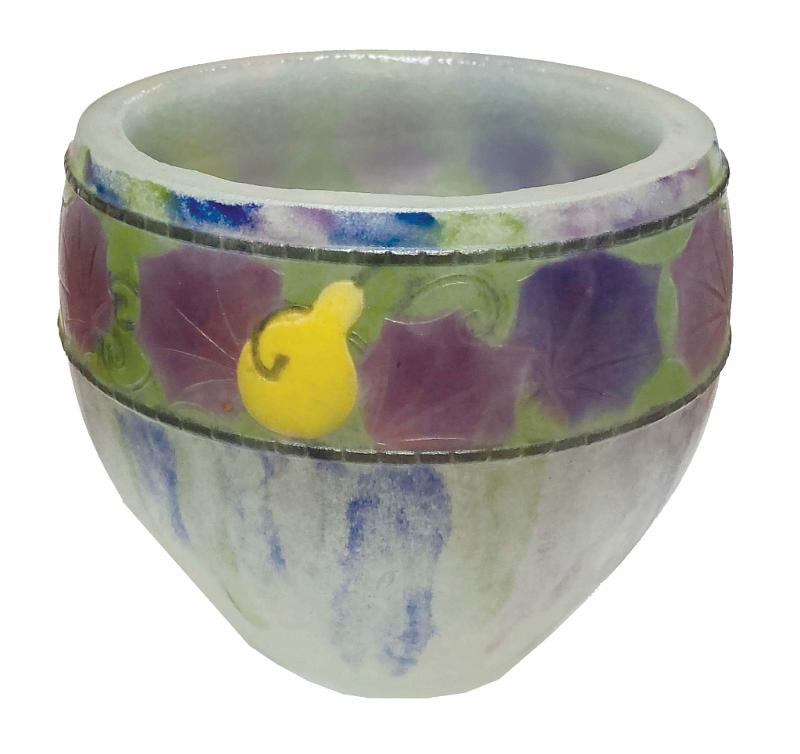
Gabriel Argy-Rousseau
French, 1885 - 1953
Argy-Rousseau’s first works were influenced by the animal and plant themes of Art Nouveau. He showcased a number of his pâte de Verre works at the 1914 Exposition du Salon des Artistes Français in Paris. Forming his own company to produce these works, Argy-Rouseeau advertised in magazines throughout America and Europe, and filed many patents for possible military use during World War I. He refined manufacturing processes to perfect and economize the production of his ceramics, but his company was dissolved amidst the global Great Depression in 1931.
Argy-Rousseau continued to make ceramics, jewelry, and other decorative objects, producing ceramics and faceted, transparent glass pâte de cristal. The upheavals of the twentieth century caused Argy-Rousseau to struggle to find fuel and raw materials for his own work, and though he continued to exhibit his own work, he worked at a commercial porcelain factory until his death in 1953.
Argy-Rousseau is best known for his glassworks such as vases, lamps, and other decorative objects. His experiments with technique and fascination with chemistry contributed to his creation of striking, unique, opaque and translucent glass. Argy-Rousseau’s early works show decorative styles with plants, birds, animals, and insects, with organic and experimental forms that echo the movement of Art Deco style.
Argy-Rousseau also had a passion for jewelry making, and designed and marketed extensive lines of brooches and pendants. These designs often comprise a small oval, square, or round art glass medallion attached with a leather cord and a tassel.
After being introduced to Greek art during his upbringing, and having studied it in his university career, Argy-Rousseau considered the Greek style an enduring influence and guiding passion in his work. This shows most often in his vases, which echo ancient Attic vases in their subjects and style.
There are no works to discover for this record.