
Eugene Verboeckhoven
Eugene Verboeckhoven
Belgian, 1798 - 1881
In 1827, Verboeckhoven moved to Brussels with his family, and soon thereafter was made a director of the Musee de Bruxelles. Thanks to his initiative, the pictures in Antwerp Cathedral, including a number of significant works by Peter Paul Rubens, were saved when the town came under fire in 1832.
Verboeckhoven became a teacher at the Academie Royale in Brussels in 1845, and his pupils there included Louis-Pierre Verwee (1807-77), his son, Alfred Jaques Verwee, and the brothers Charles Tschaggeny (1815-94) and Edmond Tschaggeny (1813-73). Verboeckhoven frequently painted the animals as part of landscapes by J. B. Klombeck, Jean-Baptiste De Jonghe, Henri Van Assche, Barend Cornelis Koekkoek and Louis-Pierre Verwee.
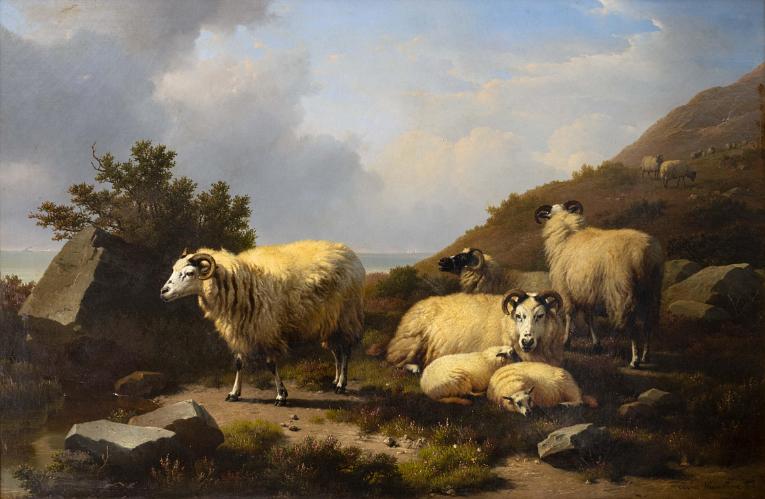
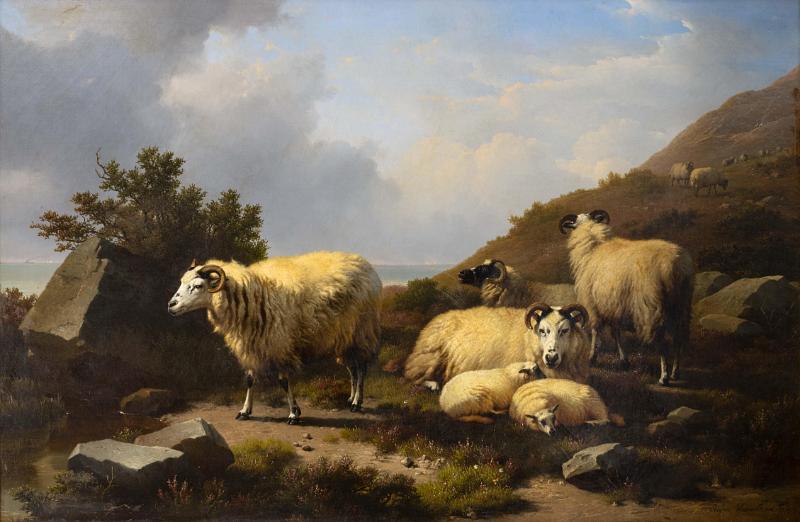
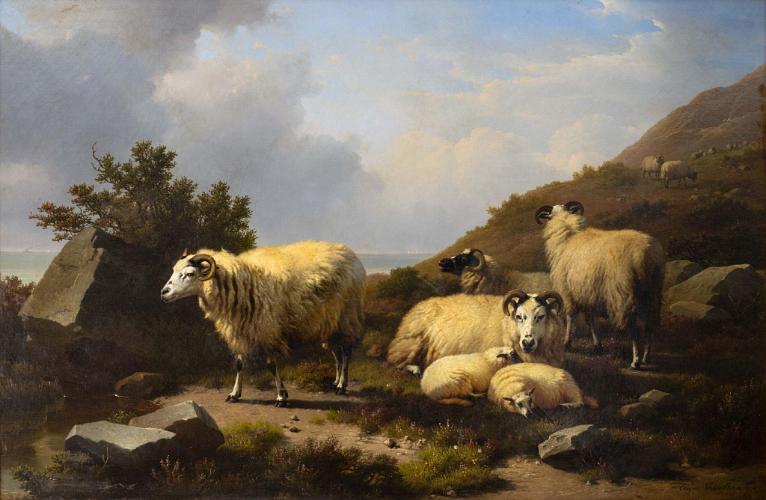
Eugene Verboeckhoven is deemed to be one of the foremost animal painters of the nineteenth century. In Verboeckhoven's work animals often bear human characteristics and are reminiscent of bourgeois portraits of the time. In his book on Verboeckhoven, Berko writes "he could have been called the "Raphael of sheep", for his rams are so well drawn, arrogant and proud; his ewes surrounded by graceful lambs, look gentle and complacent as ewes do, and all his pastoral scenes are bathed in a warm, pleasing and golden light. Eugene Verboeckhoven was a remarkable painter of horses, goats and game; he also painted small figures on foot or on horseback, playing scrupulous attention to detail; the gun, the powder flask, the hunter's gaiters, down to the picturesque hat, the threadbare overcoat, the shepherd's crook, and of course the last-born baby lamb under the shepherd's arm."
There are no works to discover for this record.