Breathtaking acquisition by iconic American photographer
Breathtaking acquisition by iconic American photographer

Breathtaking acquisition by iconic American photographer

2023-07-07

Edward Curtis

American, 1868 - 1952

Celebrated American photographer and ethnologist, Edward Sheriff Curtis devoted his practice to the documentation of early 20th century Native American life and culture.

As government regulations, settlements, and industry encroached further upon tribal lands, indigenous people and their traditions became increasingly marginalized. For many, their way of life was threatened, and in some instances, had vanished entirely.
For over 30 years, Curtis photographed and documented more than 80 tribes - from west of the Mississippi to the Mexican border to northern Alaska. He not only recognized the pressing need to record and preserve indigenous culture, but to disseminate that knowledge across America.

In 1930, Curtis published The North American Indian, a massive photo-compendium, consisting of 20 folios. Each contains 75 hand-pressed photogravures, approximately 300 pages of text, and additional, supplemental photogravures.
Through his photography and the release of his film documentary, Curtis was able to raise awareness of the impending cultural destruction. His projects garnered support from prominent and powerful figures including President Theodore Roosevelt and J. Pierpont Morgan.
Interest in Curtis's work continues to grow. When the original The North American Indian entered the market in 2012, it broke records. Totaling over $1.4 million dollars, the sale was one of the all-time highest for photobooks.

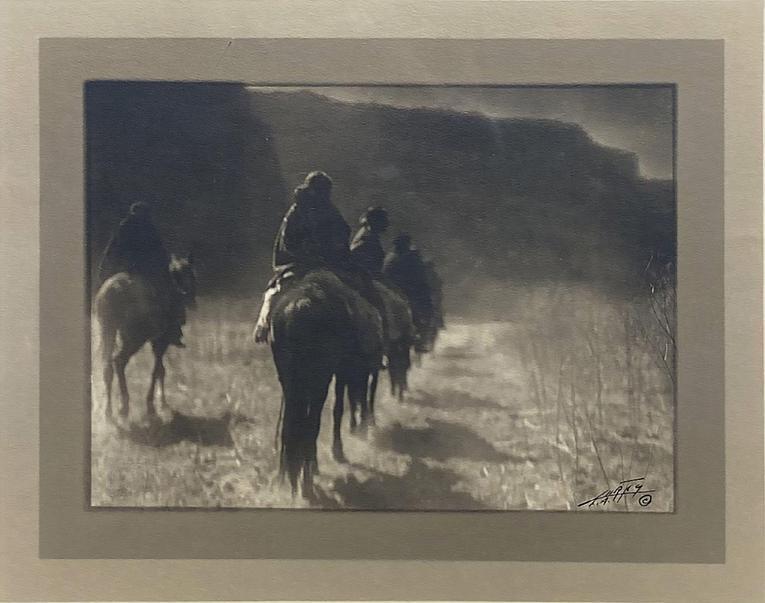
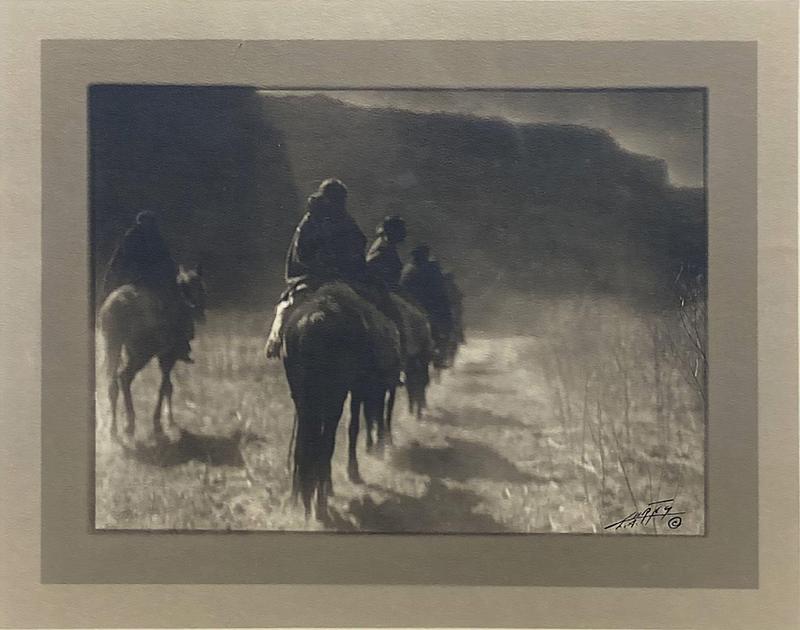
The Vanishing Race, 1904

Curtis wrote that this scene of Navajo riding off into the distance showed “that the Indians as a race, already shorn in their tribal strength and stripped of their primitive dress, are passing into the darkness of an unknown future.”

Edward Curtis (American, 1868 - 1952)
The Vanishing Race, 1904
Platinum Border Print
10 x 12 inches
Signed Lower Right
AVAILABLE FOR PURCHASE


Edward Curtis

American, 1868 - 1952

Born in 1868 near Whitewater, Wisconsin, Edward Sheriff Curtis became one of America’s finest photographers and ethnologists. When the Curtis family moved to Port Orchard, Washington in 1887, Edward’s gift for photography led him to an investigation of the Indians living on the Seattle waterfront. His portrait of Chief Seattle’s daughter, Princess Angeline, won Curtis the highest award in a photographic contest. Having become well-known for his work-with the Indians, Curtis participated in the 1899 Harriman expedition to Alaska as one of two official photographers. He then accompanied George Bird Grinell, editor of Forest and Stream, on a trip to northern Montana. There they witnessed the deeply sacred Sundance of the Piegan and Blackfoot tribes. Travelling on horseback, with their pack horses trailing behind, they emerged from the mountains to view the valley floor massed with over a thousand teepees – an awesome sight to Curtis and one that transformed his life.
Everything fell into place at that moment: it was clear to him that he was to record, with pen and camera, the life of the North American Indian. Edward S. Curtis devoted the next 30 years photographing and documenting over eighty,tribes west of the Mississippi, from the Mexican border to northern Alaska. His project won support from such prominent and powerful figures as President Theodore Roosevelt and J. Pierpont Morgan. From 1911-1914, Curtis also produced and directed a silent film based on the mythology of the Rawakiutl Indians of the Pacific Northwest. Upon its completion in 1930, the work, entitled The North American Indian, consisted of 20 volumes, each containing 75 hand-pressed photogravures and approximagely 300 pages of text. Each volume was accompanied by a corresponding portfolio containing at least 36 photogravures.


Art In Depth: Andrew Wyeth (American, 1917 - 2009)
2022-01-22

Go in depth with one of the most notable artists in American history, Andrew Wyeth (American, 1917 - 2009). We are featuring a major, large scale painting Upland Country, 1939 available at Kodner Gallery.

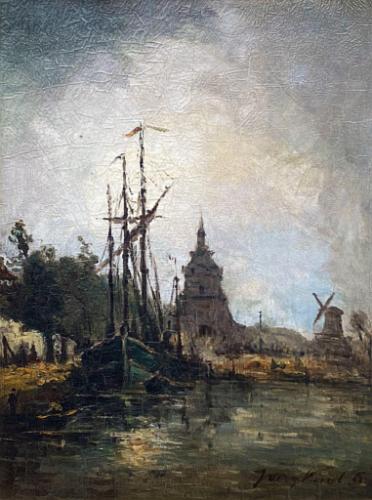
Art In Depth: Johan Barthold Jongkind
2022-01-01
We're taking a closer look at his gorgeous painting Fishing Boats painted in 1876 and learning more about why Jongkind is considered the forefather of Impressionism.
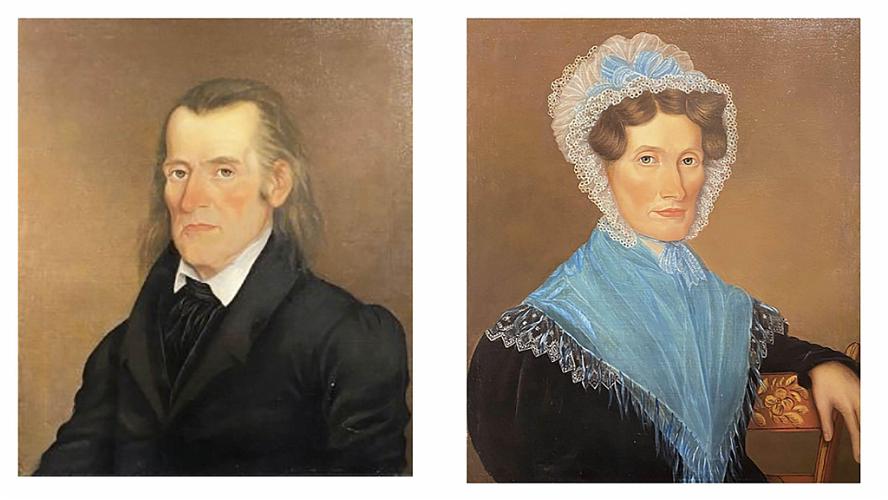
Quite a Pair of Portraits: George Caleb Bingham Paints Mr. and Mrs. Fortney Wyan
2022-01-04
We are taking a closer look at an exquiste pair of portraits by America's Artist George Caleb Bingham (American, Missouri, 1811-1879).
Created by the lauded 19th Century American artist Mr. and Mrs. Fortney Wyan, represent the paradigmn of foundational American portraiture, defining the aesthetics of
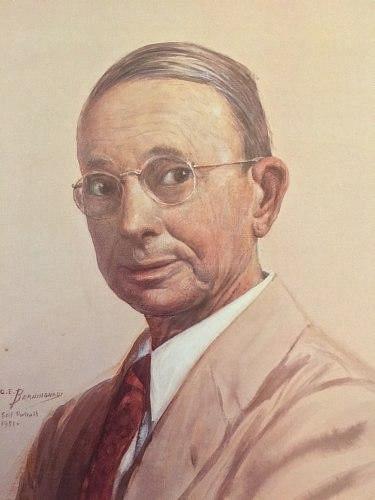
Oscar Edmund Berninghaus, 1874-1952: St. Louis-Born Painter of Western Scenes
2025-02-06
Over forty years ago Martin Kodner of St. Louis, Missouri began a love affair with the works of the great German/American artist, Charles Ferdinand (Carl) Wimar (1828-1862) and the great American artist and native St. Louisan, Oscar Edmund Berninghaus (1874-1952). A member of the Appraisers Association of America as well as a listed expert on the artist, Kodner began the project of producing the first ever Charles Ferdinand Wimar and Oscar Edmund Berninghaus Cataloging Projects from the volumes of detailed information collected through the years.
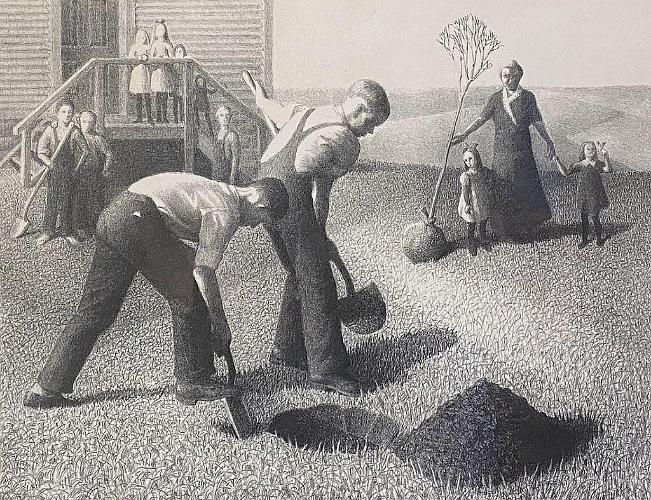
Grant Wood's First Lithograph
2022-01-06

Learn more about our recently acquired lithograph by seminal American Regionalist painter Grant Wood (American, 1881-1942).

Keith Haring "The Valley" Suite
2022-04-18

Learn more about our recently acquired pair of engravings from one of the most important and influential American contemporary artists Keith Haring.

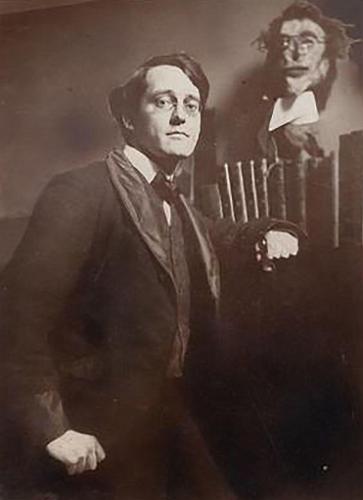
John Sloan
2020-05-29
John Sloan studied at the Pennsylvania Academy of Fine Arts, Philadelphia, from 1892 to 1894. He sold his first canvas at the age of 14. He regularly worked as an illustrator for newspapers such as the Philadelphia Inquirer and the Philadelphia Press, but he also designed advertising and taught himself the technique of engraving. On the advice of Robert Henri, he moved to New York in 1904 and subsequently became a member of The Eight. Sloan was politically active and joined the Socialist Party in 1910; he stood for election to the New York State Assembly the same year but was defeated and stood again in 1915. He trained at the Art Students League in New York in 1916 and was elected president in 1931 but resigned the following year to join the Archipenko School of Art. He joined the League again in 1935. In 1929, he was elected to the National Institute of Arts and Letters. His teaching has influenced a whole generation of artists.


Frederick Edward McWilliam: Surrealist Sculptor
2024-05-01

It's been another busy week! Here's a sneak peek at one of our most desirable new arrivals. Stop by for early access to this super rare bronze sculpture Patriarch by Frederick Edward McWilliam CBE (Northern Irish, 1909-1992), now available at Kodner Gallery.

Sacred Gold x Huang Gang (Chinese, b. 1961)
2023-06-05

This week, we're featuring a gleaming work by internationally renowned Contemporary Chinese artist, Huang Gang (Chinese, b. 1961).

Huang Gang's practice merges traditional Chinese making techniques, calligraphy, and mediums - such as lacquer and gold leaf - with the modern aesthetics of abstraction to create compositions filled with energy and color.

Artists We Love: Nellie Mae Rowe (American, 1900 - 1982)
2023-03-22

Kodner Gallery recently acquired Green Lady, 1978, an excellent mixed-media drawing from Nellie Mae Rowe's most expressive and iconic period - her late career.

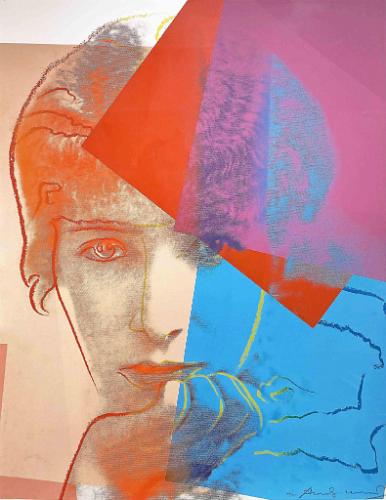
Andy Warhol depicts iconic actress Sarah Bernhardt
2023-06-28
Warhol features Sarah Bernhardt “the most famous actress the world had ever known" as a part of his important 1980 series of large scale lithographs.